au canal
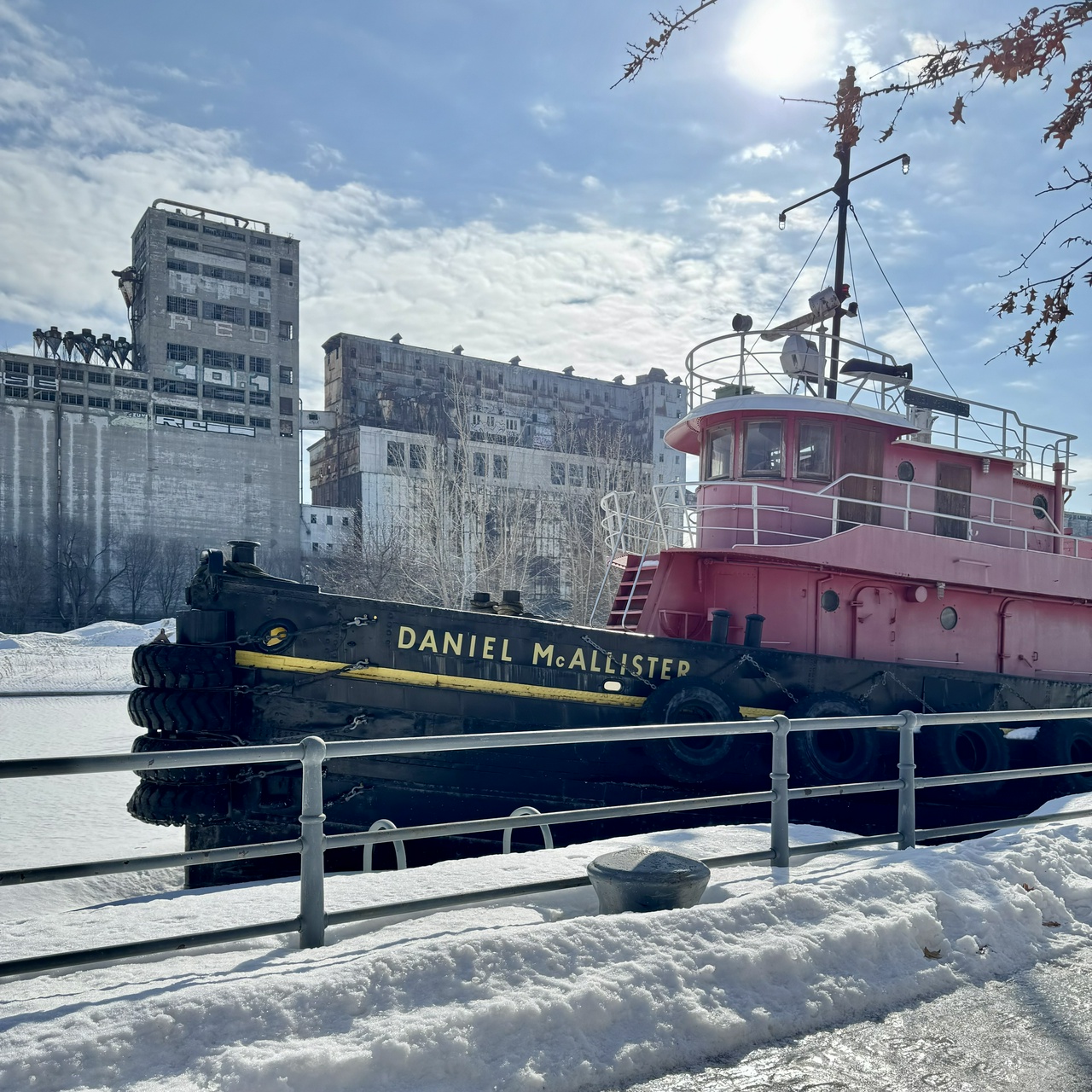
glace sur le trottoir
le remorqueur daniel mcallister attaché au quai
derrière les vieux silos
le fleuve s’ouvre vers l’aval
je reste là un moment à penser
que l’eau finit toujours par partir
Writings from the shore between tides, ni tout à fait la terre ni tout à fait l'eau.
glace sur le trottoir
le remorqueur daniel mcallister attaché au quai
derrière les vieux silos
le fleuve s’ouvre vers l’aval
je reste là un moment à penser
que l’eau finit toujours par partir

a worker stepped outside and the building gave him up for the length of a cigarette.
smoke lifted, thin enough to pass inspection.
i sat across the way, waiting, where nothing was required of me.
the door closed and kept its number.
someone walked through the place the smoke marked.
the street resumed without remembering us.
i have never known love that didn’t leave a bruise somewhere, even if it was shaped like a palm pressed gently against the small of my back, reminding me to keep walking when the street went quiet and my name felt like a threat.
some nights, i mistake survival for a lover who texts back late but always says the right thing. some days, i wish i could forget how good it feels to be wanted for the sound of my grief.
my body has learned to breathe through closed doors, has called it kinship when someone remembers my name after i flinch.
let me be honest: i have built altars from the broken. lit candles where silence should have meant no. kissed ghosts goodbye and still invited them back in,
because sometimes i need a witness even if they can’t hold me.
don’t call me resilient. call me the scream that stayed in my throat until it fermented into a poem. call me the fire alarm no one pulled. call me the boy who kept showing up to the wrong kind of church, hoping someone might bless the parts of him still covered in ash.
i am not healing. i am making room for the possibility that i might one day not have to.

When the train curved out of Jasper and the last trace of town dissolved into trees, the air shifted. The mountains widened. The sky opened. Burned slopes unfurled beside the train, charred trunks rising with a patient stillness. The valley floor stretched in long, unbroken lines, marked by fire and by gentler seasons. Light moved across the land in a slow, steady sweep.
My body answered.
There was a small moment, easy to miss, when the hum beneath the floorboards matched the rhythm of my breath. The seat vibrated lightly under my palms, and the world outside the window moved with the same calm I felt inside my chest. Not metaphorically. Physically. My nervous system eased into the pace of the land passing by.
I leaned into the window, letting the cold glass hold the weight of my forehead. A thin smear of dust along the frame caught the fading light. Outside, nothing rushed. The view revealed what was there: blackened trunks, ashen soil, new shoots pushing through what remained. A record of burning and continuing.
Something opened in me.
The land offered only its presence. No message. No direction. Just itself. Something inside loosened, some long-held habit of arranging meaning or shaping myself around what I encountered. Here, in a landscape carrying its own history, witnessing came easily.
A faint ache surfaced. It moved with the slow rhythm of the train, leaning toward relief. The relief of existing without tightening, without shaping myself for anything outside me. It brought memories of times when breath caught high in my chest, when I tried to fold myself into places that offered no room. The grief in that memory rose and thinned without overtaking. I looked again at the dark forms of trees that had been through fire and continued to stand.
As the land shifted, snow-dusted slopes giving way to river flats catching the last light, my body's signals became unmistakable. They pointed not toward interpretation but toward a direction I could feel. With nothing pressing against them, they held their own certainty.
Dusk pooled in the valley. The burned trunks blurred into silhouettes.
The longing inside me stretched out without urgency. It gestured toward spaces shaped by sincerity, toward a pace of living with room for breath. When the window darkened and my reflection merged with the last lines of the valley, I saw my face softened by the dim interior light.
The land outside held its shape.
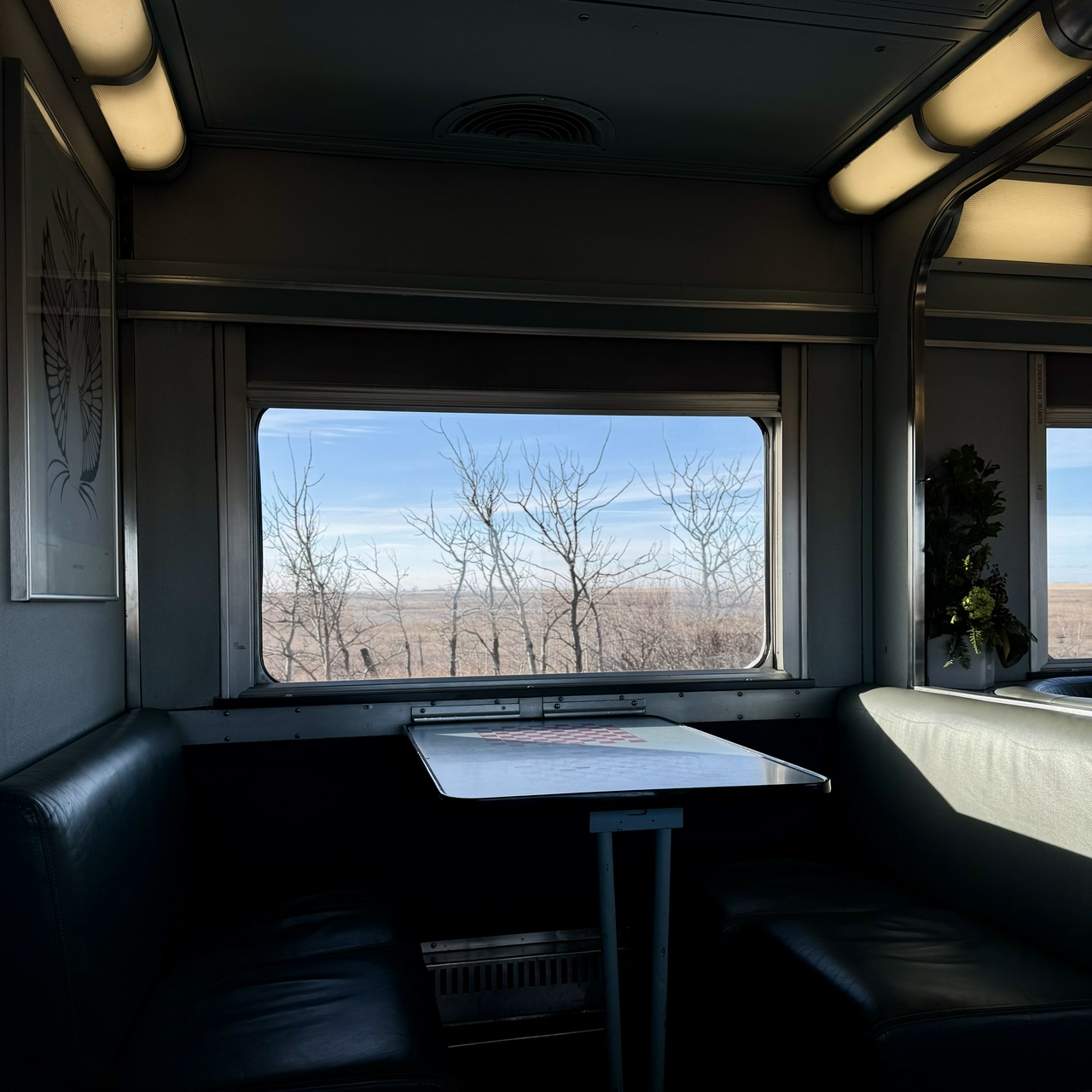
i moved how the land moved low light over burnt slopes a single trunk split open but still standing
the ocean didn’t ask for me but it didn’t leave the train curved and my breath caught up
my chest found space the seat held my weight the hum matched the rhythm i didn’t know i was waiting for
i followed what stayed what didn’t flinch what made room without asking me to fold
ease came in through the ribs like memory like a name i used to know
not escape not softness just the truth of a body finally unbraced
i met myself in the quiet before the next turn
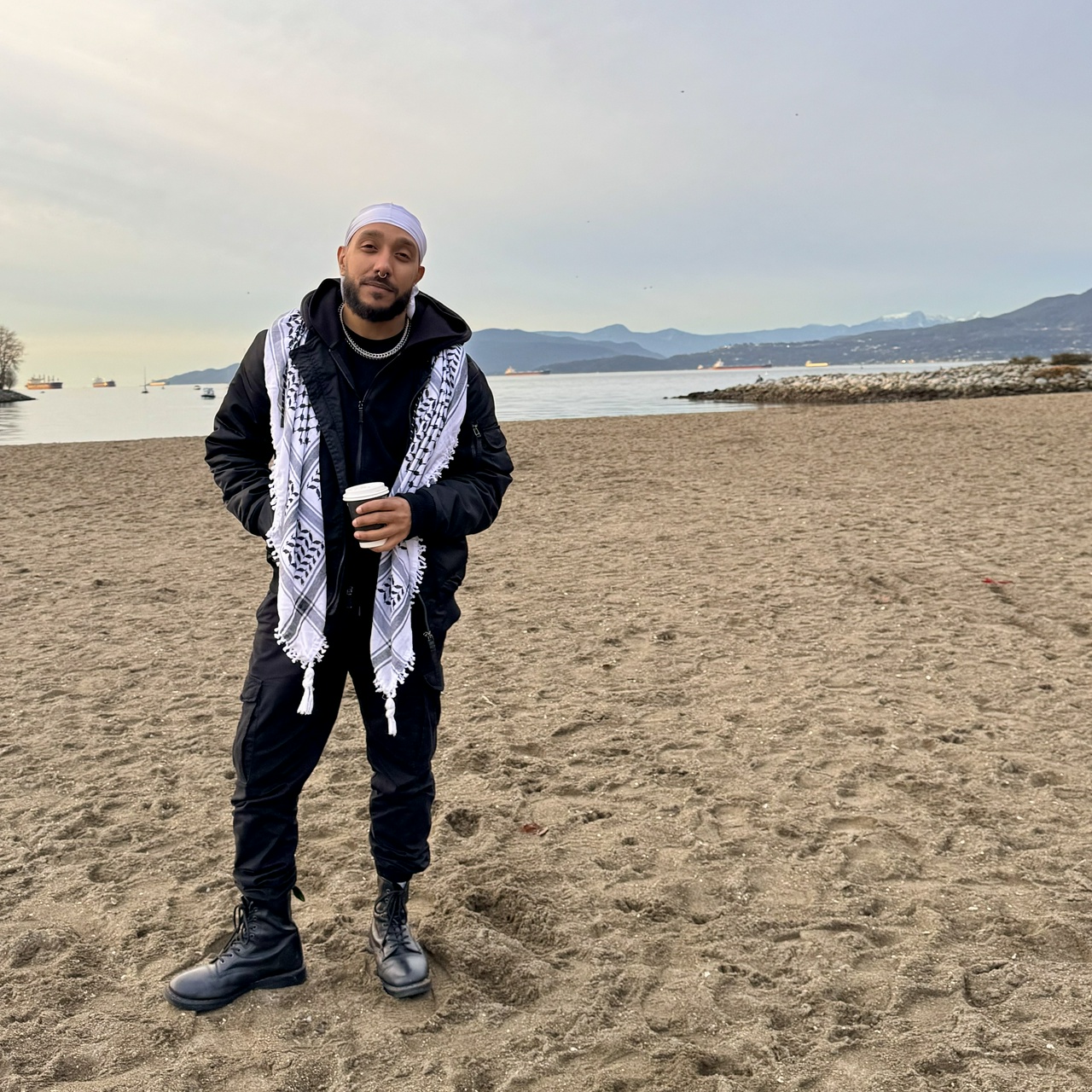
i came west to ask if this ocean could hold me
i sat still long enough to listen
it didn’t lie— but it didn’t reach me
no pull in the sternum no names in the salt
not the same ghosts not the same grief
this water has memory but not of me
still, i bowed
not every wave needs to carry me back
I believe the ocean remembers more than the archives do. I believe its remembering is a kind of justice that cannot be erased, rolling forward in salt that stings and cleans in the same breath, reminding us that healing and reckoning move in the same tide.
I believe every wave is a witness, that the water keeps count of every name that was taken. I believe the wind still carries their syllables inland, pressing them into our mouths each time we speak of freedom.
I believe I come from those who crossed unwilling and still crossed— from the ones who refused to vanish the way history required, from the ones who turned rope into rhythm, hunger into song. I believe their music still hums in the undertow when I am tired.
I believe forgetting is not survival; it is surrender. And I believe survival without memory is no survival at all, because I’ve seen comfort scab over a wound and dare to call itself healing while the bleeding goes on.
⸻
I believe the Atlantic is not a border but a sentence unfinished, its subject and verb still searching beneath the foam. I was born to finish that sentence with my own mouth— to make language out of water, and vow out of breath.
The sea does not forgive. And that’s all right. Forgiveness was never asked for. What the dead wanted was this: that we tell the truth with the same force that tried to silence it. I know the body keeps the weather of its ancestors, that salt settles in the bones like a vow. When the wind cuts through my coat, it’s only reminding me whose work I belong to.
I’m standing where the tide knows my name without needing my voice to say it. That kind of knowing— it’s the closest thing I’ve found to mercy.
If I forget, salt my mouth until the truth burns clean again. If I falter, harden the ground so I remember what I stand on. If I shrink, widen the horizon until fear has no corner left to hide. If I go silent, let the horn in the fog call me back to the living.
⸻
This is the work: to remember, to make, to return— to carry others with me. To call the tide by its real name when I can hear it, and teach my breath to move in time with the sea.
We were never cargo. We were chorus. Still are. Still singing.
The song is the bridge. The bridge is the future.
The ocean is not blue. It is work. And the work is love in its hardest, truest form— a love that lifts, that names, that refuses to forget.
Because of this, I will not look away. I will not mistake rest for freedom. I will not mistake quiet for peace.
I will return to the water until the water returns to me. I will keep my hands open to the wind. I will speak, even when my voice is salt.
I will remember. And I will build.
the inbox blooms while the death toll updates. i double-click silence. i open the portal, and brace for impact. someone is grieving a breakup. someone wants to disappear. i say mm-hmm, say yes, say tell me more. i do not say: the world is burning.
i scroll before sessions just to confirm that the grief is still real. it always is. congo, sudan, gaza flicker behind the scheduler. the platform asks: would you like to send a reminder?
i write: client was tearful, grounded in the session, able to reflect. i do not write: my chest is a locked file. my jaw clicks from clenching the names i cannot say aloud. the session ends. i bill.
my tea goes cold between autoplays. the footage plays muted, but i can hear it anyway. a child’s name trends— not for surviving. i check for land acknowledgements and evacuation orders in the same breath.
i do not scream. i do not post. i do not sob between sessions. i eat lunch like i’m supposed to. it tastes like anesthesia.
a client thanks me for holding space. i want to say: the space is breaking.
i am splintered between the rubble and the rubric, between my ethics and the endless wars. between holding the line and losing it completely.
i google how to stay human and close the tab. i light a candle and forget what it’s for. i try to write a post and delete the words: this is not okay.
but i say thank you. i say take care.
i write another note. i name the hour. i call it progress.
“I am not interested in rescuing Black being(s) for the category of the “Human”, misunderstood as “Man”, or for the material conditions that they re/produce continue to produce our fast and slow deaths. I am interested in seeing and imagining responses to the terror visited on Black life and the ways we inhabit it, are inhabited by it, and refuse it. I am interested in the ways we live in and despite that terror. By considering that relationship between imaging and imagining in the registers of Black annotation and Black redaction, I want to think about what these images call forth. And I want to think through what they call on us to do, think, feel in the wake of slavery—which is to say, in an ongoing present of subjection and resistance.”
— Christina Sharpe, In the Wake: On Blackness and Being, p. 116