Undertow
Place: A bench facing southeast on the Flour Dock, Peel Basin, Tiohtià:ke Date: 2026-09-25, 08:05 EDT Conditions: 10ºC and sunny. Clear skies reflecting off the calm water. A crisp autumn breeze.
I woke up early again today. I facilitated a post-screening panel for Club Sexu and the National Film Board of Canada last night, and it felt good. I felt in my element, and crashed shortly after getting home. I crawled out of bed, washed my face, brushed my teeth, then slid my bomber jacket over the restlessness that has pressed on my shoulders for months. Wandering sleepily down Sainte-Catherine in the morning light, I ended up, as I often do when I’m downtown this early, at Café Olimpico.
The place was full, as always, and there was just one barista at that hour. Today, a group of cyclists in matching spandex and white helmets crowded around the edge of the bar, right by the door. I could only assume they were European, since they took their coffees standing at the bar despite the room having absolutely no space for it. In town for the UCI Road World Championship, I surmised. The already cramped space was more perilous with their presence, my backpack and my eyes dodging unintentional elbows and sideways glances. I’m used to it in this city, in this body.
I ordered an oat latte and a chocolatine to go, tipped with a smile, and snaked my way out the door. By this time, those same cyclists were crowding the sidewalk. I brushed my way past, not even sure where I was going until I saw the 35 idling at the corner of Union and Maisonneuve. The Transit app says it leaves at 07:35, so I meander on board and grab a seat.
The sun had been out the whole time, though you could hardly tell. The towers block its light from the street at this time of day, leaving only the wind. Sharpening the breeze into something that cuts. I glanced out the right-hand window and saw an ad on a neighbouring bus: Encourager le français, ça donne du courage. It’s meant to encourage francophones to be patient with business owners who are still learning the language. A plea for empathy from a campaign that now feels as if it’s from another time.
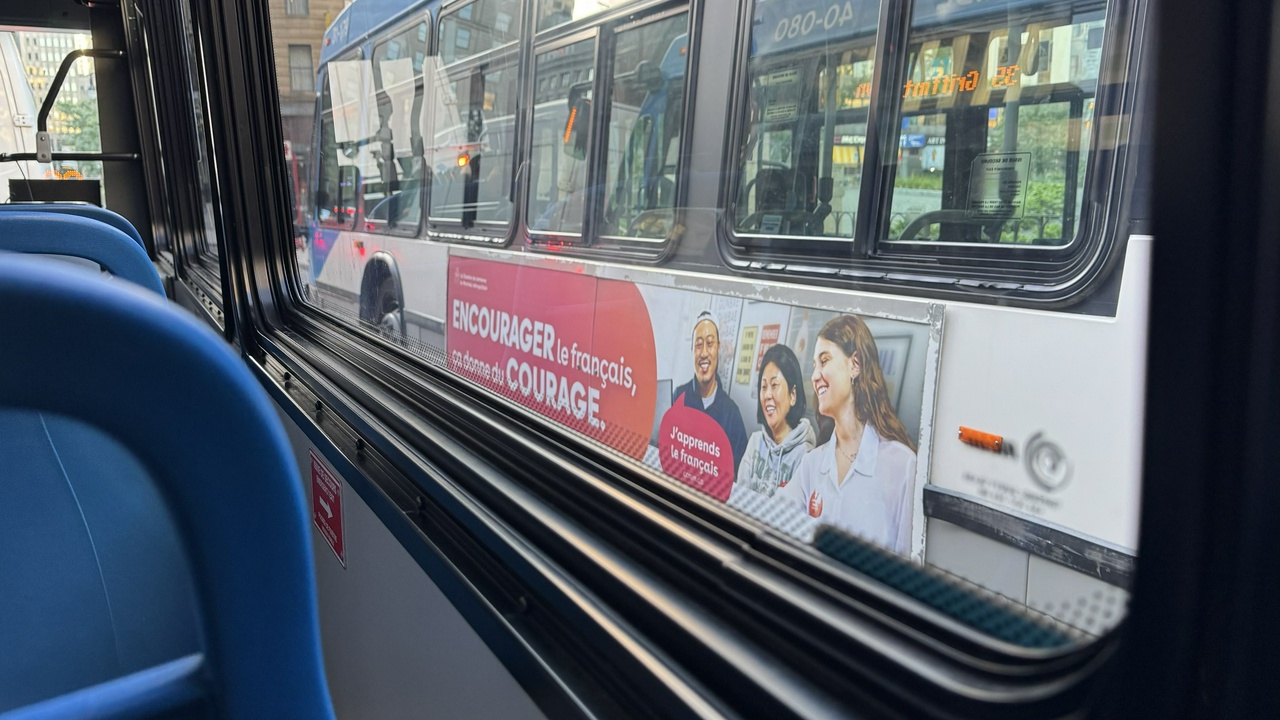
These days, politicians have been talking differently about language. The structures that facilitated inclusion have been defunded by austerity’s thousand cuts, sharp like the autumn breeze, and those who were already struggling to get by are left in the dark. Painted to be the problem for society’s ills. Scapegoated. Marginalized. I felt the tension rise in my body, so I took a photo and turned my attention to the other window as the bus wandered down Côte-du-Beaver-Hall, Saint-Jacques, and McGill. The bikers from the café, in an even larger, even more spandex-clad group made their way past us on the protected path by our side. They eventually make their way past the bus and we don’t see them again. Returned to the current of a city sleepily coming to life.
I’ve been exploring this same route for days now, largely without meaning to, and I don’t think that’s coincidental. When I first moved here, I used to call this area “Little Toronto.” There was something about the tightly packed condo towers, the chain storefronts, the suspicious absence of parks. The corner of Peel and Wellington, where I got off the bus with a quick merci to the bus driver, makes the case on its own. The traffic lights here have a bright yellow border, which is common in Toronto, but much less so here. There’s a protected left turn that gets priority over pedestrians. The cycle stays red on all sides for just a beat too long, daring anyone to run it. These structures have already decided who they’re for and who gets the luxury of moving through them unencumbered. That knowledge too settles onto my shoulders and folds into my route toward the water.
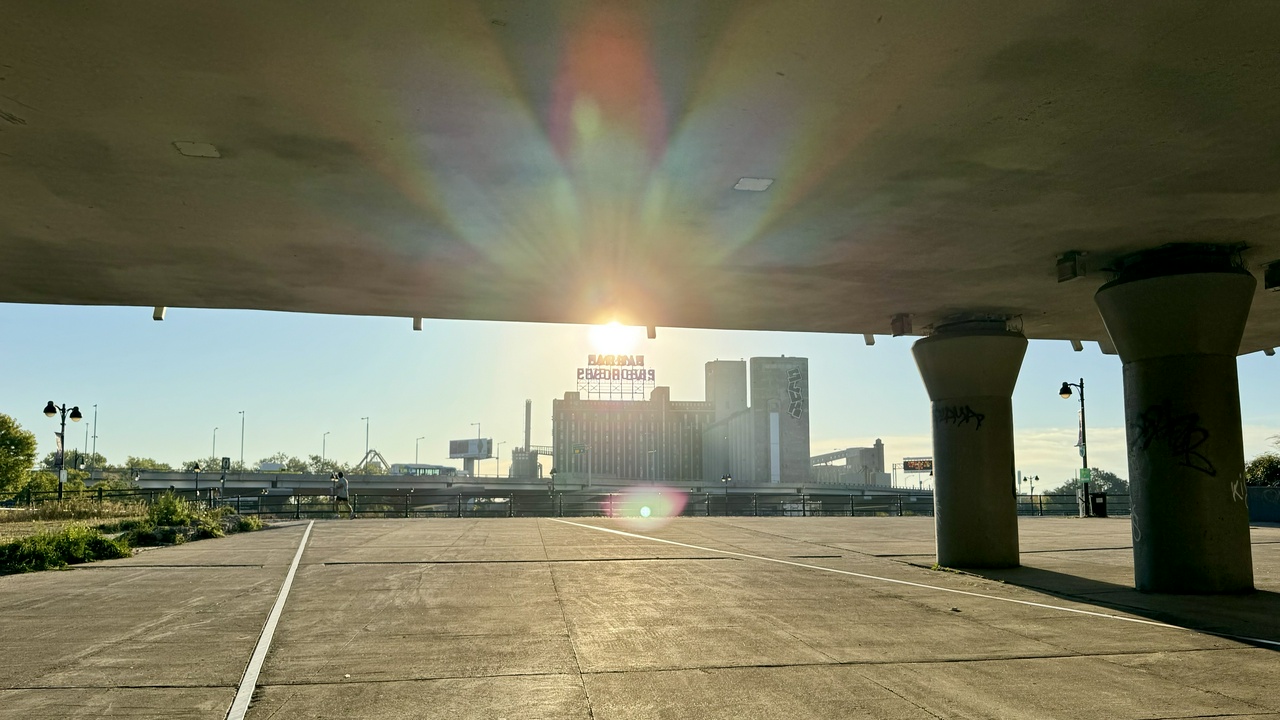
The buildings have been hiding the sun’s warmth since Sainte-Catherine. That is, until I get to the rail underpass just past the corner of Peel and Smith. It breaks free for a glorious moment, bathing my skin and the Farine Five Roses sign in its warm, morning glow. Wind threads my coat, brushing my neck, and for a heartbeat, the world holds. I take it in with a profound inhale before moving toward that bench facing southeast on the Flour Dock that’s been calling my name.